Celebrated Changemaker
The Leader Who Closed a Foundation — and Made Sure No One Fell Through the Cracks
Leadership is challenging, and we believe in celebrating those who excel. Each month, we invite you to join us in celebrating exceptional leaders who have achieved remarkable feats while collaborating with us at It's the Impact. Leadership can be isolating, and recognition is well-deserved. Please reach out to schedule a Discovery Session anytime.
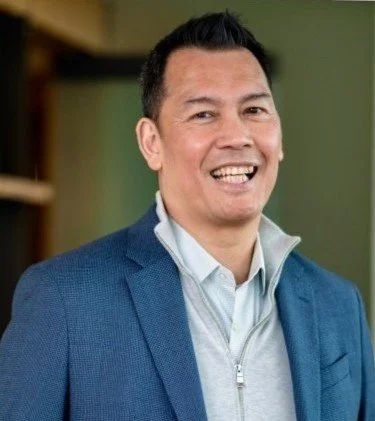
This month, we celebrate Rhonnel Sotelo, who spent more than a decade leading the Rogers Family Foundation in Oakland — and then did one of the hardest things a leader can ever be asked to do: he closed it down, on purpose, and took care of every single person affected along the way.
What does winding down an organization have to do with taking care of people?
If you're Rhonnel, everything.
For twelve years, Rhonnel led the Rogers Family Foundation, pouring resources into Oakland's public schools and the students who depend on them. But the chapter we want to celebrate isn't the building up. It's the letting-go — because in the letting-go, Rhonnel revealed what his leadership was made of all along. The Rogers Family Foundation was never designed to exist forever, and at some point, that truth had to become a plan. Rhonnel is the leader who carried out that plan without leaving a single person behind.
Most leaders are remembered for what they built. Rhonnel will be remembered for how many people he protected on the way out the door.
An Ending Full of Human Beings
We don't usually think of closing something down as legacy work. We think of launches, growth, scale. Endings get treated as logistics — something to "manage," to "get through."
Rhonnel saw it differently because he looked at the ending and saw faces. A foundation winding down still has commitments to honor, grantees counting on it, a community watching, and a staff staring down the loss of their own jobs. Every one of those is a human being with a future hanging in the balance. And the way you close — what you fund through the last mile, who you protect, how much certainty you offer people in an uncertain moment — that is the real measure of a mission.
What makes Rhonnel exceptional is that he refused to treat the ending as administrative. He treated it as an act of care — the most important work he'd ever do, done for other people.
A 'Why' Built on Everyone Rising Together
The best leaders I know don't just have a mission statement. They have a story. And Rhonnel explains exactly why he closed the way he did.
He's the son of immigrants who came from the Philippines in the wave that followed the Hart-Celler Act — among the first generation of Asian families to arrive chasing an American dream they would mostly hand to the people who came after them. As Rhonnel has gotten older, he's realized something tender about that dream: it was never really about him.
"It’s hard to see success in front of you. It's generational though; the idea that everyone who comes after you can do better — that every generation has the promise and possibility of fulfilling their potential. Your success is theirs and theirs is yours. Generation after generation."
He grew up in a home rich with care and pride — the kind expressed not in speeches but in sacrifice, in showing up, in everything his parents did to open doors for the generation behind them. "Silence is affirmation," as he puts it: in his family, devotion didn't need to announce itself to be unmistakable. It's a beautiful inheritance he's carried into every boardroom since — do the right thing quietly, let your care show up in your actions, and trust that the people who matter feel it. His mother just turned ninety this past January, still cheering him on. His father, gone now for over a decade, poured a lifetime of lessons into building the possibilities Rhonnel now extends to others — and Rhonnel carries both of them, and that whole inherited dream, into every decision he makes.
Holding Everyone's Timeline at Once
Here's what made Rhonnel's spend-down extraordinary: every person in his orbit was living on a different clock, carrying a different fear — and he made it his job to hold all of them together.
"I felt like a time traveler, living across multiple timelines. You tell your team the foundation is spending down — and they immediately think, 'I don't have a job anymore.' But there are three to five years of work that have to be done, and the foundation needs you as your best self there for it. Your board, meanwhile, feels like three to five years is so far away."
His job was to stand in the middle of all of that and keep everyone moving — absorbing the uncertainty himself so that others didn't have to carry it. And if it ever looked composed from the outside, don't be fooled:
"If it felt composed, it was not — you're a duck. Calm on the surface, paddling furiously right below."
He built what he called an operational spend-down plan: a clear-eyed roadmap of the thirteen or fourteen functions the organization performed and exactly when each one would conclude. And then he did something most leaders would never do — he put his own role first on the chopping block. Executive functions go first, he told the family, so that everyone else could grow into bigger responsibilities on the way out. His people wouldn't leave with a gap in their story; they'd leave with promotions, expanded skills, and stronger résumés. (The board stared at him. He stared back. They'd assumed he'd be the one turning off the lights, which he eventually did)
"You have to figure out what the bridge looks like while you're climbing onto it — building the structure until you connect to the other side, so people can get from one place to the next."
That's the image to hold onto: Rhonnel wasn't building a bridge for himself. He was building it so everyone else could cross first.
Removing Every Ambiguity He Could
What anchored all of it was an obsession with transparency — because Rhonnel understood that in a season already thick with what happens to me?, clarity itself is a gift a leader can give.
So he gave it, deliberately and everywhere:
Annual reviews? Still happening. People deserved to know how they were doing and to keep growing, right up to the end.
Raises and bonuses? Yes. A sunset was no excuse to stop honoring people's work.
Coaching and professional development budgets? Available to everyone — because his people weren't just closing out an organization, they were preparing for their next chapter, and he secured the commitments to fund that preparation.
A fair severance built around tenure and contribution? Yes. No one would have to gamble their family's security on an unclear ending.
In a moment when he couldn't remove the ambiguity — the foundation was ending, and that was final — Rhonnel removed every other ambiguity he possibly could. That is a profound act of care. His team never had to wonder, guess, or read tea leaves. They could plan their lives, because their leader made sure they had what they needed to plan with.
The Community Came First, Always
And the care didn't stop with his team. No grantee got kicked to the curb on a last grant — Rhonnel and the Rogers team created a funding runway for grantee partners to land safely. He treated the organizations Rogers funded the way he treated his own people: as human beings whose futures deserved protection, not line items to be closed out.
Then, instead of letting their final year together feel like a funeral, he and his team decided 2023 would be the foundation's best year ever: a celebration of Oakland, a thank-you party for the community, and a written tribute to every single staff member, honoring what each person had given. Even the goodbye was designed as a gift — to the city, to the partners, to the people.
Think about that. Most closures end with a press release. This one ended with a written expression of gratitude to every individual who made the work possible.
And Finally — the One Person He'd Forgotten
Here's the thing about leaders who take care of everyone: there's usually one person left off the list. For most of the spend-down, Rhonnel was taking care of everybody but himself.
At some point, I had to pivot hard and say, okay, Rhonnel — you've taken care of everyone else. Now let's make sure you're taken care of. And to his enormous credit, he heard it. He'd spent years telling his own team to take on coaching, utilize the development budget, and invest in their next chapter. And then he caught his own hypocrisy:
"Classic… 'Do as I say, not as I do.' My team would feed it right back to me — if you're telling us to do all these things and you're not doing them yourself, that seems weird and not right."
So, about a year out from his own departure, Rhonnel did what he'd been urging everyone else to do: he invested in himself, and we began coaching together. He came to it the way many accomplished leaders do — a little skeptical that anything new was left to learn, and not entirely comfortable talking about himself. What he found was a place to explore.
Together, we mapped what might come next — consulting, partnerships, different kinds of roles — and used the Clifton Strengths process to do something he openly admits was hard for him: claim his own strengths out loud. He took three messy sentences and sharpened them into a clear statement of who he is — urban planner turned grant maker — that now sits at the top of his resume. And he learned to own the language: board whisperer, strategist, leader of leaders, finance enthusiast.
"The work identified and reinforced the things that are inherently true about you — and then it became about accepting, owning, and celebrating them. There was joy and delight behind those things."
And here's the part that means the most to me: when the foundation's doors closed, the coaching didn't. He chose to continue the work into his next chapter.
"The smartest thing I've done through this learning journey was making sure that I continued the coaching, so that I got off to a good start for what came next. I don't think I’d be where I am right now without it."
He still returns to the frameworks we built together — he can spot "bad work" in a moment and name what "great" looks like, and now he's reaching for what's beyond great: the phenomenal. Along the way, he discovered language from his new colleagues at Room to Breathe Project for a philosophy that connects everything he's ever done — the care for his team, the care for Oakland, the new work in San Francisco, and finally the care for himself:
"It's not just about mitigating the things that are bad in your life. There's the question of what you do to grow the good."
That, by the way, is the best description of coaching I've ever heard — growing the good. His words, not mine. Caring for people was never a phase of Rhonnel's spend-down. It's the through-line of his whole career — and now it includes himself.
What Rhonnel's Story Teaches All of Us
Rhonnel isn't a headline-grabbing leader. His most important work happened in spend-down plans, severance conversations, and one-on-one talks about people's futures. But the impact is just as real — and his story carries lessons every changemaker should sit with:
How you treat people in the end is the truest test of your leadership. Anyone can care for a team as the mission grows. Rhonnel cared for them when the mission was concluding — and that's when care counts most.
Transparency is mercy in an uncertain moment. When people already face ambiguity about their futures, remove every other ambiguity you can. Reviews, raises, severance, development budgets — clarity is a kindness, and Rhonnel gave it in every form available.
Protect your partners, not just your people. A non-abrupt, meaningful runway for every grantee meant no organization Rogers had supported was left scrambling. Care that stops at your own walls isn't the full job.
Endings can be celebrations. A best-year-ever finale, a thank-you to Oakland, and a written tribute to every staff member — Rhonnel and the Rogers team proved a goodbye can honor people instead of mourning an institution.
You can't pour out forever without being filled. The leader who spent years caring for everyone else finally turned that same care inward — and landed somewhere even better. Sustaining yourself isn't selfish. It's how the caring continues.
I am so grateful that leaders like Rhonnel exist — that when handed a genuinely hard mandate, his first instinct was to ask “Who needs protecting?”, and his last act was to say thank you, by name, to everyone. Oakland is better for it. His former team is better for it. And so is everyone whose path he crosses from here.
You could do a great many things with your talent, Rhonnel. The fact that you keep spending it on other people means more than you know.
If any part of this story feels familiar — a hard transition on the horizon, a team counting on you, or a long season of caring for everyone but yourself — you don't have to figure out the bridge alone. That's exactly the work we do together.
Find out what’s next for you — schedule a Free Discovery Call.